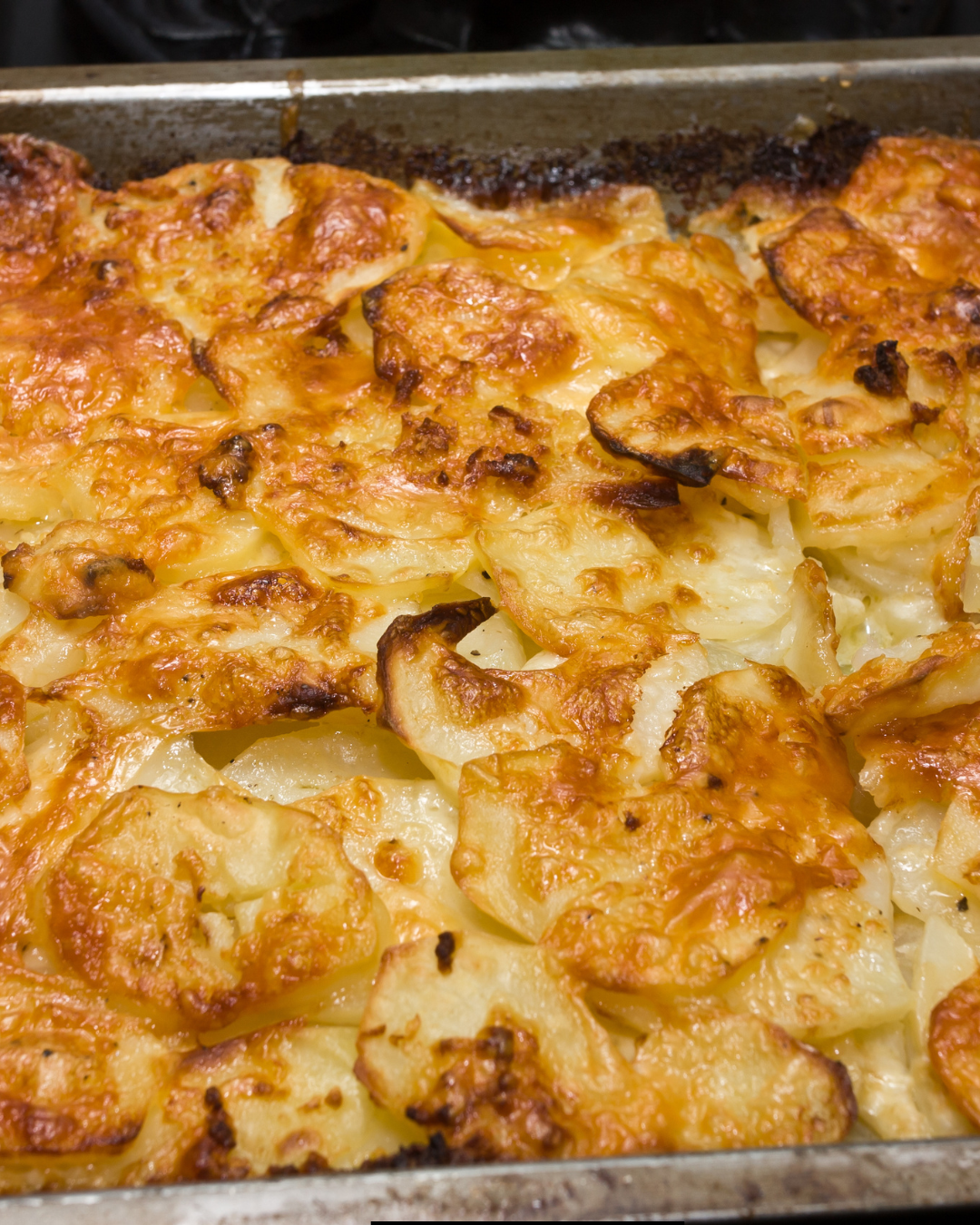
What I personally love about Jamie’s approach to this classic French-inspired gratin is how he takes something so classic and approachable and elevates it with quality ingredients and a touch of his signature charm. The thinly sliced potatoes are blanketed in a rich, garlicky cream sauce, finished with golden, bubbling cheese on top—honestly, how could anyone resist this Jamie Oliver’s Dauphinoise Potatoes?
Table of Contents
How to make Jamie Oliver’s Dauphinoise Potatoes
Jamie Oliver’s Dauphinoise Potatoes is a rich, creamy French-style potato bake made popular through his home-style cooking twist on the classic dish.
Ingredients
Here’s what you’ll typically need for Jamie Oliver’s Dauphinoise Potatoes:
- 2 kg (approximately 4.4 lbs) potatoes (Maris Piper or Yukon Gold are ideal for their creamy texture)
- 2 cloves of garlic, finely chopped or crushed
- 500 ml (about 2 cups) double cream (heavy cream)
- 500 ml (about 2 cups) whole milk
- 100 g (about 1 cup) grated cheese (Gruyère, Parmesan, or Cheddar work well, but this is optional)
- Fresh herbs (e.g., thyme sprigs, bay leaves, or rosemary)
- 1 small pinch of nutmeg (optional, for added warmth)
- Sea salt and freshly ground black pepper, to season
- 30g of butter (for greasing and flavor)
Instructions
- Preheat your oven to 180°C (350°F). Grease a large ovenproof baking dish with butter or oil to prevent sticking.
- Peel the potatoes and thinly slice them (about 2–3 mm thick) using a sharp knife or mandoline slicer. The thin slices ensure the potatoes cook evenly.
- In a large saucepan, pour in the cream and milk. Add the garlic, thyme sprigs, and a pinch of nutmeg (if using). Warm over medium heat, stirring occasionally, until heated through. Do not allow the mixture to boil.
- Arrange a layer of sliced potatoes evenly in the greased baking dish. Season with a pinch of salt and pepper. Repeat the process to create layers until all the potatoes are used.
- Remove the saucepan from the heat and pour the warm cream mixture over the potatoes, ensuring it spreads evenly across the dish. Distribute any garlic or herb pieces evenly as well. The liquid should cover the potatoes.
- If you’re using cheese, sprinkle it generously over the top. Gruyère or Cheddar cheese works particularly well to create a golden, crispy crust that’s full of flavor.
- Cover the dish with foil or a lid and bake in the preheated oven for about 45–50 minutes. Remove the foil and continue baking for another 15–20 minutes, or until the potatoes are tender and the top is golden and bubbling.
- Let the dish rest for 5–10 minutes before serving. This allows the creamy sauce to settle and thicken slightly, making it easier to cut into portions.
Tips for Perfect Dauphinoise Potatoes
- Waxy or all-purpose potatoes like Maris Piper or Yukon Gold work best. They hold their shape during cooking while still becoming tender.
- Evenly sliced potatoes help the dish cook uniformly and create that visually stunning layered look.
- Season each layer of potatoes lightly with salt and pepper. It ensures the entire dish is flavorful, not just the cream sauce.
- Fresh rosemary, bay leaves, or a dash of nutmeg can add depth to the flavor. Just be mindful not to overpower the dish.
- Insert a knife into the center of the dish. If it slides through the layers without resistance, the potatoes are perfectly cooked.
- While cheese isn’t always part of traditional Dauphinoise, it adds an irresistible golden crust. Gruyère and Parmesan are great choices for flavor and texture.
- You can prepare the dish a day in advance. Once fully baked, let it cool, cover, and refrigerate. Reheat gently in the oven before serving.
What to serve with
Jamie Oliver’s Dauphinoise Potatoes is a rich, creamy, and indulgent side dish that pairs beautifully with a variety of mains and accompaniments. Its velvety texture and deep flavors make it a versatile choice for everything from dinner parties to holiday meals.
1. Roasted Meats
The creamy decadence of Jamie Oliver’s Dauphinoise Potatoes pairs wonderfully with savory roasted meats, which offer a savory and slightly crispy contrast. Here are some classic meat options:
- Roast Beef or Steak: A perfectly roasted beef joint or a juicy steak is a match made in heaven for Dauphinoise Potatoes. The rich, meaty flavors complement the creamy potatoes, while the crispy edges of roasted beef provide a textural balance.
- Roast Chicken: A classic roast chicken with golden, crispy skin and tender meat pairs beautifully with the richness of Jamie Oliver’s Dauphinoise Potatoes. Add roasted carrots or a light salad to complete the meal.
- Lamb: Slow-roasted lamb, especially with a hint of garlic and rosemary, is a luxurious pairing. The earthy flavors of lamb cut through the creaminess of the potatoes, creating a perfectly balanced meal.
- Pork Dishes: A roast pork loin or tender pork chops with a sweet glaze (like honey mustard or apple cider) contrasts deliciously with the savory, creamy potatoes.
2. Grilled or Pan-Seared Seafood
Seafood might not be the first pairing that comes to mind, but the lightness of fish or shellfish can provide a refreshing contrast to the creamy Dauphinoise Potatoes:
- Salmon: Grilled or pan-seared salmon with a crisp skin is a perfect option. The richness of the fish complements the creamy potatoes, while its mild, buttery flavor doesn’t overpower the dish.
- White Fish: Cod, sea bass, or halibut, served with a lemon butter sauce, adds a delicate brightness to offset the heaviness of the potatoes.
- Scallops or Shrimp: For a more sophisticated pairing, serve the potatoes alongside caramelized scallops or garlicky shrimp for a touch of luxury.
Ingredients Substitutes
Jamie Oliver’s Dauphinoise Potatoes is a dish that focuses on richness, creaminess, and fresh, bold flavors. While the original recipe uses specific ingredients, you may want to make substitutions for dietary needs, ingredient availability, or personal preferences.
1. Potatoes
The foundation of Dauphinoise Potatoes lies in using the right type of potato. Jamie Oliver typically recommends all-purpose or waxy potatoes like Maris Piper or Yukon Gold, due to their creamy texture. However, here are some alternatives:
- Russet Potatoes: These are starchier and will result in a softer, fluffier dish. Just note that they might break apart slightly more than waxy potatoes.
- Red Potatoes: If Yukon Gold isn’t available, red potatoes are another waxy option that holds their shape well.
- Sweet Potatoes: For a unique twist, use sweet potatoes. Their natural sweetness pairs well with the creamy sauce and adds a different flavor profile.
- Turnips, Parsnips, or Celeriac: For a low-carb or creative variation, you can replace some or all of the potatoes with thinly sliced turnips, parsnips, or celeriac.
2. Cream
The use of double cream (heavy cream) is essential to achieving a velvety, rich texture in the classic recipe. However, if heavy cream isn’t available or you’re looking for a lighter or dairy-free substitute, here are your options:
- Half-and-Half: For a lighter version, use an equal amount of half-and-half instead of cream. The dish will be less rich but still creamy.
- Milk and Butter: Combine whole milk with a tablespoon of butter for every cup of cream needed. This mimics the texture and fat content of cream.
- Coconut Cream: For a dairy-free or vegan option, coconut cream is an excellent substitute. It’s rich and creamy, though it will add a slight coconut flavor.
- Cashew Cream: Blend soaked cashews with water (in a 1:1 or slightly thicker ratio) until creamy. This is a great dairy-free option that has a neutral flavor.
- Plant-Based Cream Alternatives: Many grocery stores now offer plant-based heavy cream substitutes made from oat milk, almond milk, or soy milk. These work well in a vegan or lactose-free version.
3. Milk
Whole milk is commonly combined with cream in Jamie Oliver’s recipe to give the sauce a rich, creamy base. If you don’t have whole milk or need a substitute, consider the following:
- Low-Fat Milk: Use 2% or even skim milk for a lighter version, though the final dish will be less creamy.
- Non-Dairy Milk: Unsweetened almond, cashew, oat, or soy milk can replace regular milk in the recipe. For the best results, choose a milk alternative that is unsweetened and unflavored.
- Evaporated Milk: Evaporated milk is a shelf-stable option with a creamy texture, perfect if you don’t have fresh milk on hand.
- Broth or Stock (for a lighter version): If you want to remove dairy altogether, vegetable or chicken broth can add flavor to the potatoes, though the dish will be less rich.
4. Cheese (Optional)
Cheese is optional in Dauphinoise Potatoes, but often included to add extra flavor and texture. Jamie Oliver frequently uses cheeses like Gruyère, Parmesan, or Cheddar. If you need substitutes, consider these options:
- Swiss Cheese: A good alternative to Gruyère that melts well with a similar nutty flavor.
- Mozzarella: Use for its melting qualities, though it’s milder in flavor.
- Pecorino Romano: A sharper and saltier substitute for Parmesan.
- Goat Cheese: For a creamy, tangy variation, crumble goat cheese over the potatoes.
- Vegan Cheese: Try store-bought vegan cheese shreds (e.g., Violife, Daiya, or nutritional yeast for a cheesy flavor).
5. Garlic
Garlic is essential for adding depth and flavor to Dauphinoise Potatoes. If you need substitutes:
- Garlic Powder: Use about 1/4 teaspoon of garlic powder for every clove of garlic.
- Shallots or Onions: Finely chop and sauté them for a milder, slightly sweet alternative to garlic.
- Roasted Garlic: Roast a head of garlic until soft and use the cloves for a sweeter, caramelized garlic flavor.
6. Fresh Herbs
Fresh herbs like thyme, rosemary, or bay leaves are key to infusing the cream with an aromatic flavor. If these aren’t available, you can substitute with:
- Dried Herbs: Use about one-third of the quantity compared to fresh herbs (e.g., 1 teaspoon of dried thyme instead of 1 tablespoon fresh).
- Herb Blends: Premade blends like herbes de Provence can add a nice, rounded herbal flavor.
- Oregano or Basil: These work in a pinch but may alter the flavor profile slightly.
Final Thoughts
Jamie Oliver’s Dauphinoise Potatoes pair beautifully with roasted meats like beef, lamb, or chicken. It’s also a great side for a festive holiday feast or a cozy weekend dinner.
More Potatoe Recipes:
Ingredients
- 2 kg (approximately 4.4 lbs) potatoes
- 2 cloves of garlic, finely chopped or crushed
- 500 ml (about 2 cups) double cream (heavy cream)
- 500 ml (about 2 cups) whole milk
- 100 g (about 1 cup) grated cheese
- Fresh herbs (e.g., thyme sprigs, bay leaves, or rosemary)
- 1 small pinch of nutmeg (optional, for added warmth)
- Sea salt and freshly ground black pepper, to season
- 30g of butter
Instructions
- Preheat your oven to 180°C (350°F). Grease a large ovenproof baking dish with butter or oil to prevent sticking.
- Peel the potatoes and thinly slice them (about 2–3 mm thick) using a sharp knife or mandoline slicer. The thin slices ensure the potatoes cook evenly.
- In a large saucepan, pour in the cream and milk. Add the garlic, thyme sprigs, and a pinch of nutmeg (if using). Warm over medium heat, stirring occasionally, until heated through. Do not allow the mixture to boil.
- Arrange a layer of sliced potatoes evenly in the greased baking dish. Season with a pinch of salt and pepper. Repeat the process to create layers until all the potatoes are used.
- Remove the saucepan from the heat and pour the warm cream mixture over the potatoes, ensuring it spreads evenly across the dish. Distribute any garlic or herb pieces evenly as well. The liquid should cover the potatoes.
- If you’re using cheese, sprinkle it generously over the top. Gruyère or Cheddar cheese works particularly well to create a golden, crispy crust that’s full of flavor.
- Cover the dish with foil or a lid and bake in the preheated oven for about 45–50 minutes. Remove the foil and continue baking for another 15–20 minutes, or until the potatoes are tender and the top is golden and bubbling.
- Let the dish rest for 5–10 minutes before serving. This allows the creamy sauce to settle and thicken slightly, making it easier to cut into portions