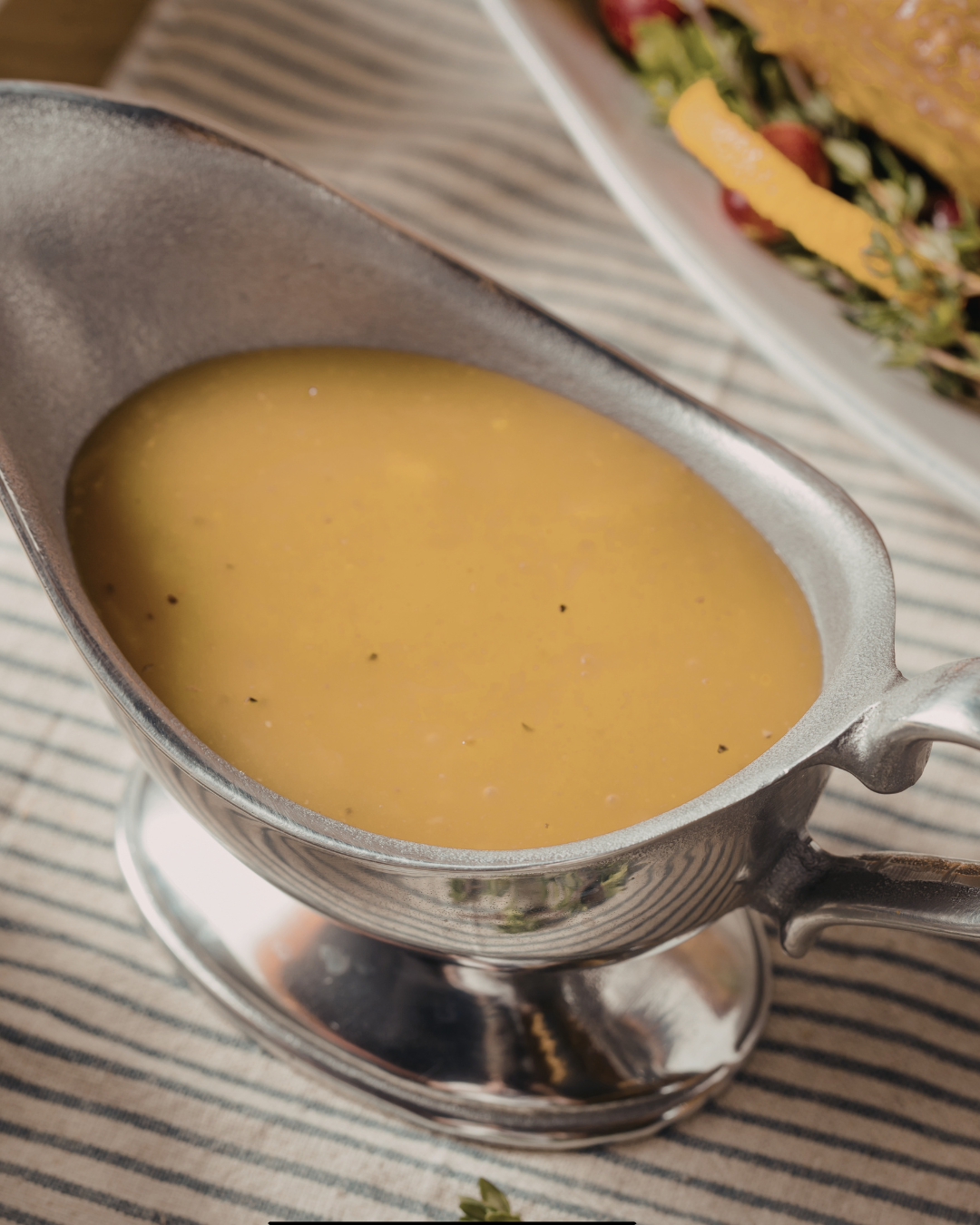
What makes this Jamie Oliver’s Get Ahead Gravy recipe so special is its simplicity and genius—it’s gravy that you can make days (even weeks) before the big event. I first tried this method before a family Christmas, and trust me, knowing the gravy was ready and waiting in the fridge took so much pressure off the day. Plus, Jamie’s recipe delivers a flavor that’s rich, warming, and packed with those beautiful layers of roasted veggies, fresh herbs, and savory goodness that transform a meal into a feast.
Table of Contents
How to make Jamie Oliver’s Get Ahead Gravy
Jamie Oliver’s get ahead gravy is basically a make-in-advance gravy recipe designed to save you stress on the day you’re cooking (especially for big meals like Christmas or Sunday roasts).
Ingredients
- Roasted Veggie and Flavor Base
- 2 onions (peeled and quartered)
- 2 carrots (washed and roughly chopped)
- 2 celery sticks (roughly chopped)
- 2 rashers of smoked bacon (optional, for added flavor)
- 2 bay leaves
- 4 fresh sage sprigs
- 4 fresh rosemary sprigs
- 2 tablespoons of plain (all-purpose) flour
- 1 bulb of garlic (halved across the middle)
- Olive oil
Liquids
- 1.5 liters (about 6 cups) chicken, turkey, or vegetable stock
- Meat trimmings or juices from roast turkey/chicken (optional, but adds amazing flavor)
Seasoning
- Sea salt
- Freshly ground black pepper
Instructions
Step 1: Prep Your Vegetable Base
- Preheat your oven to 220°C/425°F (fan 200°C).
- In a large roasting tray, combine the onions, carrots, celery, garlic (cut side up), bacon (if using), and herbs.
- Drizzle generously with olive oil and season with a pinch of sea salt and pepper. Toss everything together to coat evenly.
Step 2: Roast For Flavor
- Place the tray in the oven and roast the veggies for about 1 hour, or until they’re soft and caramelized with a slight char. This roasting step is key to developing a deep, rich flavor.
Step 3: Build Your Gravy Base
- Remove the tray from the oven and place it on the stovetop over medium heat.
- Sprinkle the cooked veggies with the flour and mix well to coat everything. The flour will help thicken your gravy.
- Pour in the stock a little at a time, stirring well to incorporate all the bits from the tray. Use a wooden spoon to scrape up the golden sticky bits from the bottom of the tray—this is where all the flavor is hiding!
Step 4: Simmer and Intensify
- Bring the mixture to a gentle boil, then reduce the heat and let the gravy simmer for 20–30 minutes, stirring occasionally.
- Use a potato masher or the back of a large spoon to mash the roasted veggies into the liquid as it simmers. This step extracts every ounce of flavor!
Step 5: Strain for Smoothness
- Once simmered and all flavors are released, strain the mixture through a fine sieve into a large bowl or saucepan. Use the back of a spoon to press down on the veggies to get all the good juices out.
- Discard the solids (or save them for a soup base if you’d like!). The resulting gravy should be silky, rich, and free of lumps.
Step 6: Cool and Store
- Let the gravy cool completely if you’re making it ahead of time.
- Store it in an airtight container and refrigerate for up to 3 days, or freeze it for up to 3 months. When frozen, remember to thaw it in the fridge overnight before reheating.
Reheating and Finishing Tips
- When reheating the gravy on the stovetop, whisk well to incorporate any separated layers.
- Feel free to add giblets, turkey drippings, or any extra juices from your roasted turkey or chicken as you warm it through on the big day—it will further enhance the flavor.
- Check the seasoning before serving. Add a pinch of salt, pepper, or a splash of red wine if you want a richer flavor.
Jamie’s Tips for Success
- Don’t Skimp on Roasting: Allow the veggies to caramelize fully – that’s where the depth of flavor develops.
- Customize It: Use the stock of your choice (chicken, turkey, or vegetable) depending on your main dish.
- Freeze in Portions: Freeze the gravy in smaller portions to make reheating faster and easier, especially if you’re only serving a few people.
- Go Veggie: Skip the bacon and use vegetable stock for a vegetarian-friendly gravy.
What to serve with
Jamie Oliver’s Get Ahead Gravy is the ultimate flavor-packed sauce that pairs beautifully with a vast range of dishes. Whether it’s for a festive holiday feast or a humble Sunday roast, this rich, silky gravy can elevate your meal to the next level.
1. Roasted Meats
- Turkey: A classic holiday pairing, roast turkey is one of the best dishes to serve with this gravy. Whether you’re hosting Thanksgiving or Christmas dinner, drizzle (or drown!) slices of turkey breast in the warm gravy for a burst of flavor.
- Chicken: Oven-roasted or rotisserie-style chicken is another ideal partner for this gravy. The earthy, herby notes from the vegetables and herbs in the gravy beautifully complement the mild flavor of chicken.
- Beef or Lamb: Jamie Oliver’s Get Ahead Gravy isn’t just for poultry—it pairs wonderfully with roasted beef or lamb. Whether it’s slow-cooked beef brisket or a succulent roast leg of lamb, the rich gravy enhances the juiciness of the meat.
2. Holiday Classics
- Stuffing: Jamie Oliver’s Get Ahead Gravy and stuffing are a match made in heaven. Jamie’s gravy adds moisture and flavor, taking your stuffing to an entirely new level. Whether it’s a sage and onion stuffing or a sausage-based recipe, the gravy adds richness that ties the dish together.
- Yorkshire Puddings: A British classic, Yorkshire puddings are essentially vessels for gravy. Pour a generous amount of Jamie Oliver’s Get Ahead Gravy into the crispy, golden puddings and watch as they soak up all the deliciousness.
- Mashed Potatoes: Creamy mashed potatoes are an essential companion to any gravy, and Jamie’s recipe is no exception. The smooth, buttery texture of mashed potatoes works beautifully with the silky, flavorful gravy.
Ingredients Substitutes
Jamie Oliver’s Get Ahead Gravy is versatile and forgiving, meaning you can swap ingredients based on what you have on hand, dietary preferences, or specific tastes. Substituting ingredients doesn’t have to compromise the flavor—it can even add a creative twist to the classic recipe.
1. Vegetables & Aromatics Substitutes
The vegetables in this recipe are the foundation for its depth and sweetness. Substitutions can help if you’ve run out of specific ingredients or want to tweak the flavor.
Onions (2 onions)
Substitute with:
- Shallots: For a slightly milder, sweeter flavor.
- Leeks: Add a delicate and slightly grassy flavor to the gravy.
- Red Onions: These will make your gravy a bit sweeter and add a hint of color.
Carrots (2 carrots)
Substitute with:
- Parsnips: Provide a mild sweetness and earthy flavor.
- Sweet Potatoes: Adds natural sweetness and creaminess.
- Butternut Squash: Results in a more roasted, nutty sweetness.
Celery Sticks (2 sticks)
Substitute with:
- Fennel: Gives a hint of licorice-like flavor.
- Green Bell Peppers: For a mild bitterness that complements other sweet veggies.
- Zucchini: A more neutral vegetable that still contributes some texture.
Garlic (1 bulb, halved)
Substitute with:
- Garlic Paste or Powder: If fresh garlic isn’t available, use ½ teaspoon of garlic powder, increasing slightly to taste if needed.
- Shallots: A small handful can mimic the aromatic qualities of garlic.
2. Smoked Bacon (Optional)
Bacon is used to add a rich, smoky depth to the gravy, but it’s not essential. You can easily swap it for vegetarian or non-pork alternatives.
Substitute with:
- Pancetta or Prosciutto: Slightly less smoky but still luxurious.
- Smoked Paprika (Vegetarian Option): Adds that smoky flavor without any meat—start with ½ teaspoon and adjust to taste.
- Smoked Sausages (e.g., turkey or vegan sausages): Adds both texture and flavor.
- Vegan Bacon or Mushrooms: For a plant-based gravy, smoked mushroom slices or vegan bacon give a lovely umami boost.
3. Flour (2 tablespoons)
The flour is used to thicken the gravy, but if you need a gluten-free or alternative option, there are plenty of substitutes available.
Substitute with:
- Cornstarch: Mix 1 tablespoon of cornstarch with 2 tablespoons of cold water and whisk it into the gravy.
- Arrowroot Powder: A great alternative for gluten-free and paleo diets (use in the same proportion as cornstarch).
- Whole-Wheat Flour: Adds a slightly nuttier taste, but it works just as well.
- Gluten-Free All-Purpose Flour: Ideal for anyone avoiding gluten.
4. Stock (Chicken/Turkey/Vegetable)
The stock adds both volume and savory flavor. Based on your dietary needs, you can use any of the following substitutes:
Substitute with:
- Vegetarian Option: High-quality vegetable stock or stock cubes dissolved in water.
- Beef Stock: If you prefer a heartier, meatier flavor (great for roast beef or lamb).
- Homemade Stock: Use reserved vegetable water or homemade broth for a fresher flavor.
- Wine + Water: For a richer depth of flavor, use a mix of white or red wine with water (2 parts water to 1 part wine).
- Coconut Aminos or Soy Sauce: Add a dash (around 1–2 teaspoons) to water for an umami-rich vegetarian alternative.
5. Fresh Herbs and Flavorings
The classic gravy recipe uses rosemary, sage, and bay leaves to infuse the base with fresh herbaceous notes. If you don’t have these on hand, substitute with dry herbs or alternative fresh ingredients.
Rosemary, Sage, Bay Leaves
Substitute with:
- Dried Herbs: Use 1 teaspoon of dried rosemary or sage for every 3 sprigs of fresh.
- Thyme: A very similar flavor to sage and rosemary, and works as a great swap.
- Oregano or Parsley: Adds a light, fresh twist.
- Tarragon or Marjoram: For a slightly more floral note in your gravy.
- Garlic and Onion Powder (Optional Flavor Enhancers)
6. Meat Trimmings or Drippings (Optional)
Drippings or residual juices from roasted meat add incredible depth to the gravy. If you don’t have these, here are some alternatives:
Substitute with:
- Browned Butter: Simmer butter with flour until golden brown to mimic the rich, roasted flavor.
- Soy Sauce or Worcestershire Sauce: Adds umami if you’re skipping drippings.
- Marmite or Vegemite (Vegan Option): Dissolve a half teaspoon into warm water for a savory, rich flavor.
7. Olive Oil
If you’re out of olive oil or want to experiment, here are easy swaps:
Substitute with:
- Butter: Ideal for a creamier base.
- Vegetable Oil: A neutral choice if you prefer no extra flavors.
- Coconut Oil: Use sparingly; it can add a slight sweetness.
Final Thoughts
What truly makes Jamie Oliver’s Get Ahead Gravy magical is its versatility—it complements everything from golden roasts to hearty pies and even vegetarian options.
More Jamie Oliver Sauce Recipes:

Ingredients
- Roasted Veggie and Flavor Base
- 2 onions (peeled and quartered)
- 2 carrots (washed and roughly chopped)
- 2 celery sticks (roughly chopped)
- 2 rashers of smoked bacon
- 2 bay leaves
- 4 fresh sage sprigs
- 4 fresh rosemary sprigs
- 2 tablespoons of plain (all-purpose) flour
- 1 bulb of garlic (halved across the middle)
- Olive oil
Liquids
- 1.5 liters (about 6 cups) chicken
- Meat trimmings
Seasoning
- Sea salt
- Freshly ground black pepper
Instructions
Step 1: Prep Your Vegetable Base
- Preheat your oven to 220°C/425°F (fan 200°C).
- In a large roasting tray, combine the onions, carrots, celery, garlic (cut side up), bacon (if using), and herbs.
- Drizzle generously with olive oil and season with a pinch of sea salt and pepper. Toss everything together to coat evenly.
Step 2: Roast For Flavor
- Place the tray in the oven and roast the veggies for about 1 hour, or until they’re soft and caramelized with a slight char. This roasting step is key to developing a deep, rich flavor.
Step 3: Build Your Gravy Base
- Remove the tray from the oven and place it on the stovetop over medium heat.
- Sprinkle the cooked veggies with the flour and mix well to coat everything. The flour will help thicken your gravy.
- Pour in the stock a little at a time, stirring well to incorporate all the bits from the tray. Use a wooden spoon to scrape up the golden sticky bits from the bottom of the tray—this is where all the flavor is hiding!
Step 4: Simmer and Intensify
- Bring the mixture to a gentle boil, then reduce the heat and let the gravy simmer for 20–30 minutes, stirring occasionally.
- Use a potato masher or the back of a large spoon to mash the roasted veggies into the liquid as it simmers. This step extracts every ounce of flavor!
Step 5: Strain for Smoothness
- Once simmered and all flavors are released, strain the mixture through a fine sieve into a large bowl or saucepan. Use the back of a spoon to press down on the veggies to get all the good juices out.
- Discard the solids (or save them for a soup base if you'd like!). The resulting gravy should be silky, rich, and free of lumps.
Step 6: Cool and Store
- Let the gravy cool completely if you’re making it ahead of time.
- Store it in an airtight container and refrigerate for up to 3 days, or freeze it for up to 3 months. When frozen, remember to thaw it in the fridge overnight before reheating.