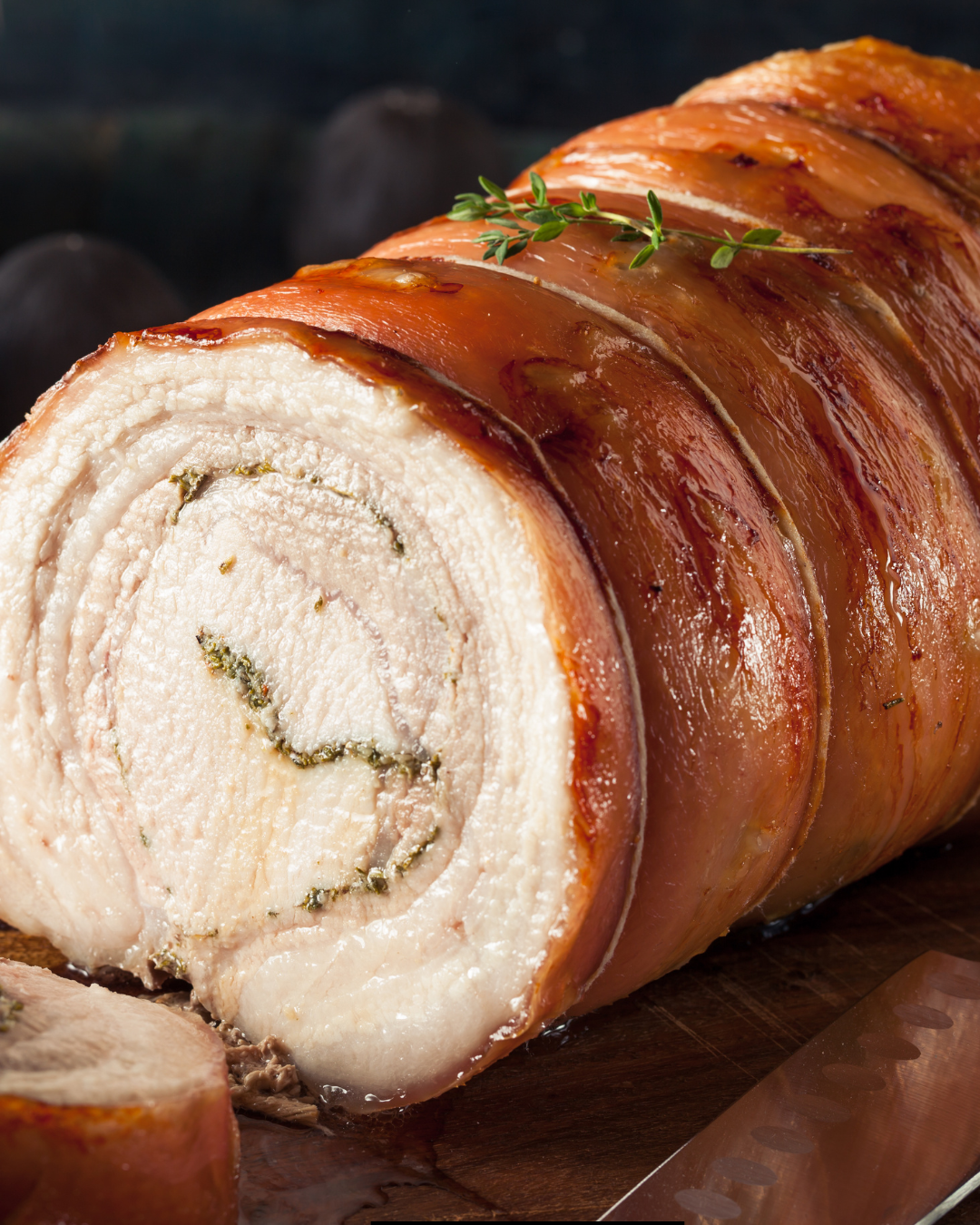
Jamie Oliver’s Porchetta is a traditional Italian roast pork dish that combines bold flavors, crispy crackling, and tender, juicy meat. And let me tell you, if you haven’t made this dish yet, you’re missing out on a culinary masterpiece that will wow your guests and make you feel like a chef in your own home.
Table of Contents
How to make Jamie Oliver’s Porchetta
Jamie Oliver’s Porchetta is his version of the classic Italian roast pork dish made by rolling and slow-roasting a boneless pork loin (often with the belly attached) that is stuffed with aromatic ingredients such as fennel, herbs, pancetta, dried fruit, breadcrumbs, Parmesan, and sometimes chicken livers.
Ingredients
Here’s what you’ll need for Jamie Oliver’s Porchetta (serves 6-8 people):
For the Porchetta:
- Pork Belly – About 2-3 kg, skin on (ask your butcher for a nicely scored piece)
- Fresh Herbs – A mix of rosemary, thyme, and sage (roughly 2 tbsp each, finely chopped)
- Garlic – 4-5 cloves, minced
- Fennel Seeds – 2-3 tsp (lightly toasted and ground for extra aroma)
- Lemon Zest – Zest of 2 lemons
- Olive Oil – 2-3 tbsp
- Salt – Generous amounts for crispy skin
- Black Pepper – Freshly ground
For the Roasting Tray:
- Carrots – 2, roughly chopped
- Onions – 2, quartered
- Celery Stalks – 2, chopped
- Bay Leaves – 2-3 leaves
- Water – About 200 ml
- White Wine – 200 ml (optional but highly recommended)
For Serving:
- Gravy (optional, made from the pan juices)
- Celeriac mash, roast potatoes, or rustic bread (optional sides)
Instructions
Step 1: Prepare the Pork Belly
- Lay the pork belly skin-side down on a clean surface.
- Mix the chopped fresh herbs, garlic, fennel seeds, lemon zest, and olive oil in a small bowl to create a fragrant rub.
- Massage the rub evenly onto the flesh side of the pork belly. Be generous — this is where all the flavor comes from! Add freshly ground black pepper to taste.
- Roll the pork tightly (starting from one long edge) to create a cylindrical shape. Tie the roll firmly with butcher’s twine every couple of inches to hold the shape while cooking.
Step 2: Prepare the Roasting Tray
- Preheat your oven to 220°C (425°F).
- Scatter the chopped carrots, onions, celery, and bay leaves across the base of a large roasting tray. This acts as your trivet, keeping the pork elevated and allowing the vegetables to absorb the juices.
- Pour in the water and white wine to keep the roast moist and add depth to the flavor.
Step 3: Roast the Porchetta
- Place the rolled and tied pork belly onto the vegetable bed, skin side facing up. Rub the skin generously with sea salt for that irresistibly crispy crackling.
- Roast at 220°C (425°F) for 30 minutes to get the crackling started.
- After 30 minutes, reduce the oven temperature to 160°C (320°F) and roast for another 2.5 hours. Baste the pork with the juices from the tray every 30 minutes.
- Once done, check the crackling — if it needs extra crunch, turn up the heat to 240°C (460°F) for the last 10 minutes, keeping a close eye to avoid burning.
Step 4: Rest and Serve
- Remove the Porchetta from the oven and let it rest for 15-20 minutes before carving. This allows the juices to redistribute evenly for tender meat.
- Strain and reserve the juices from the tray to make a flavorful gravy. Simmer the juices with a little flour or cornstarch to thicken.
Tips for Perfect Porchetta
- Ask your butcher to score the skin for you — even scoring ensures evenly crispy crackling.
- Toast the fennel seeds before grinding them. This intensifies their aroma and adds a smoky note to the dish.
- To avoid soggy skin, make sure the pork is dry before rubbing salt on the skin (you can even pat it dry with a paper towel beforehand).
- Use a meat thermometer to check the pork’s internal temperature (aim for 75°C/165°F in the thickest part of the roll).
- For a more robust stuffing, try adding finely chopped wild mushrooms or pancetta to the herb mixture.
Ingredients Substitutes
This Jamie Oliver’s Porchetta is flexible and forgiving, meaning there are many ways to substitute ingredients while still achieving a flavorful and satisfying roast.
1. Pork Belly
Original Ingredient: The traditional cut for Jamie Oliver’s Porchetta is pork belly (skin-on), which provides the fatty layer needed for juicy meat and crispy crackling.
Substitutes:
- Pork Shoulder (Skin-On): Less fatty than pork belly but still works well. You’ll get a slightly leaner roast with a good amount of flavor.
- Rolled Pork Loin with Attached Belly: Ask your butcher to provide a combination cut, with the belly attached to the loin. This allows you to roll the meat easily and retain some fat from the belly.
- Boneless Pork Butt (Boston Butt): If crackling is not essential, this cut works well for its marbling and tenderness, though you may miss out on the crispy skin.
- Turkey Thighs or Chicken (Whole or Breast): For a lighter take, you can swap pork altogether with poultry, though you’ll need to adjust the roasting time significantly.
2. Fresh Herbs (Rosemary, Sage, and Thyme)
Original Ingredient: The herb blend of rosemary, sage, and thyme forms the aromatic backbone of porchetta.
Substitutes:
- Dried Herbs: Replace fresh with dried herbs, but reduce the quantity by about 1/3 (e.g., instead of 1 tbsp fresh rosemary, use 1 tsp dried). Dried oregano, rosemary, and thyme work well together.
- Parsley with Garlic: If you don’t have rosemary or sage, parsley (flat-leaf variety) mixed with extra garlic can replicate the herbaceous flavor profile.
- Fennel Fronds: If you’re using fennel seeds, toss in some fennel fronds to enhance the herbal aroma.
- Herbes de Provence: This pre-mixed herb blend (often found in stores) usually contains thyme, rosemary, and savory—a good one-stop alternative.
3. Garlic
Original Ingredient: Fresh garlic is minced and spread across the meat for that signature savory flavor.
Substitutes:
- Garlic Powder: Use 1/4 tsp of garlic powder for every clove of garlic. Sprinkle it evenly over the meat.
- Shallots or Onions: If garlic isn’t available, finely chopped shallots or onions provide a mild, slightly sweet alternative.
- Black Garlic: For a gourmet touch, use black garlic, which has a softer, sweeter, and almost caramel-like flavor.
4. Fennel Seeds
Original Ingredient: Toasted fennel seeds are a key element in porchetta—they give the dish a distinctive anise-like flavor.
Substitutes:
- Caraway Seeds: Similar in taste profile to fennel seeds but slightly nuttier.
- Anise Seeds or Star Anise: Use sparingly, as these have a more potent licorice flavor. Star anise pods can infuse flavor if placed in the roasting pan.
- Cumin Seeds: While they have an earthier flavor, cumin adds a warm, aromatic touch to the marinade.
- Omit Altogether: If you’re not a fan of licorice flavors, you can skip fennel seeds and rely more heavily on garlic and herbs instead.
5. Lemon Zest
Original Ingredient: Lemon zest adds brightness and balances the richness of the pork belly.
Substitutes:
- Orange or Lime Zest: Either can work! Orange zest will bring a sweeter citrus note, while lime is zingier.
- Lemon Juice: If zesting isn’t an option, a teaspoon of fresh lemon juice in the marinade can help replicate its flavor.
- Apple Cider Vinegar: Use a teaspoon for a touch of acidity in place of citrus.
- White Wine or Dry Vermouth: A splash of these can provide both acidity and depth to the marinade.
Final Thoughts
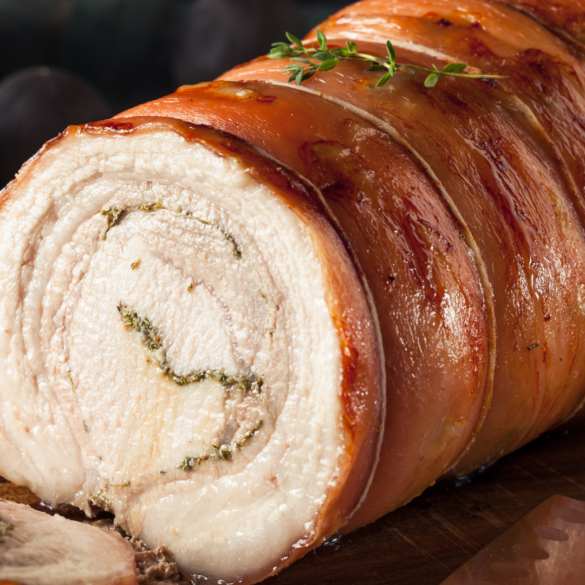
With its crispy, golden crackling and succulent, herb-stuffed meat, Jamie Oliver’s Porchetta is truly a dish that brings people together.
More Pork Recipes:
Ingredients
For the Porchetta:
- Pork Belly – About 2-3 kg, skin on
- Fresh Herbs – A mix of rosemary, thyme, and sage
- Garlic – 4-5 cloves, minced
- Fennel Seeds – 2-3 tsp
- Lemon Zest – Zest of 2 lemons
- Olive Oil – 2-3 tbsp
- Salt – Generous amounts for crispy skin
- Black Pepper – Freshly ground
For the Roasting Tray:
- Carrots – 2, roughly chopped
- Onions – 2, quartered
- Celery Stalks – 2, chopped
- Bay Leaves – 2-3 leaves
- Water – About 200 ml
- White Wine – 200 ml
For Serving:
- Gravy (optional, made from the pan juices)
- Celeriac mash
Instructions
Step 1: Prepare the Pork Belly
- Lay the pork belly skin-side down on a clean surface.
- Mix the chopped fresh herbs, garlic, fennel seeds, lemon zest, and olive oil in a small bowl to create a fragrant rub.
- Massage the rub evenly onto the flesh side of the pork belly. Be generous — this is where all the flavor comes from! Add freshly ground black pepper to taste.
- Roll the pork tightly (starting from one long edge) to create a cylindrical shape. Tie the roll firmly with butcher’s twine every couple of inches to hold the shape while cooking.
Step 2: Prepare the Roasting Tray
- Preheat your oven to 220°C (425°F).
- Scatter the chopped carrots, onions, celery, and bay leaves across the base of a large roasting tray. This acts as your trivet, keeping the pork elevated and allowing the vegetables to absorb the juices.
- Pour in the water and white wine to keep the roast moist and add depth to the flavor.
Step 3: Roast the Porchetta
- Place the rolled and tied pork belly onto the vegetable bed, skin side facing up. Rub the skin generously with sea salt for that irresistibly crispy crackling.
- Roast at 220°C (425°F) for 30 minutes to get the crackling started.
- After 30 minutes, reduce the oven temperature to 160°C (320°F) and roast for another 2.5 hours. Baste the pork with the juices from the tray every 30 minutes.
- Once done, check the crackling — if it needs extra crunch, turn up the heat to 240°C (460°F) for the last 10 minutes, keeping a close eye to avoid burning.
Step 4: Rest and Serve
- Remove the Porchetta from the oven and let it rest for 15-20 minutes before carving. This allows the juices to redistribute evenly for tender meat.
- Strain and reserve the juices from the tray to make a flavorful gravy. Simmer the juices with a little flour or cornstarch to thicken.