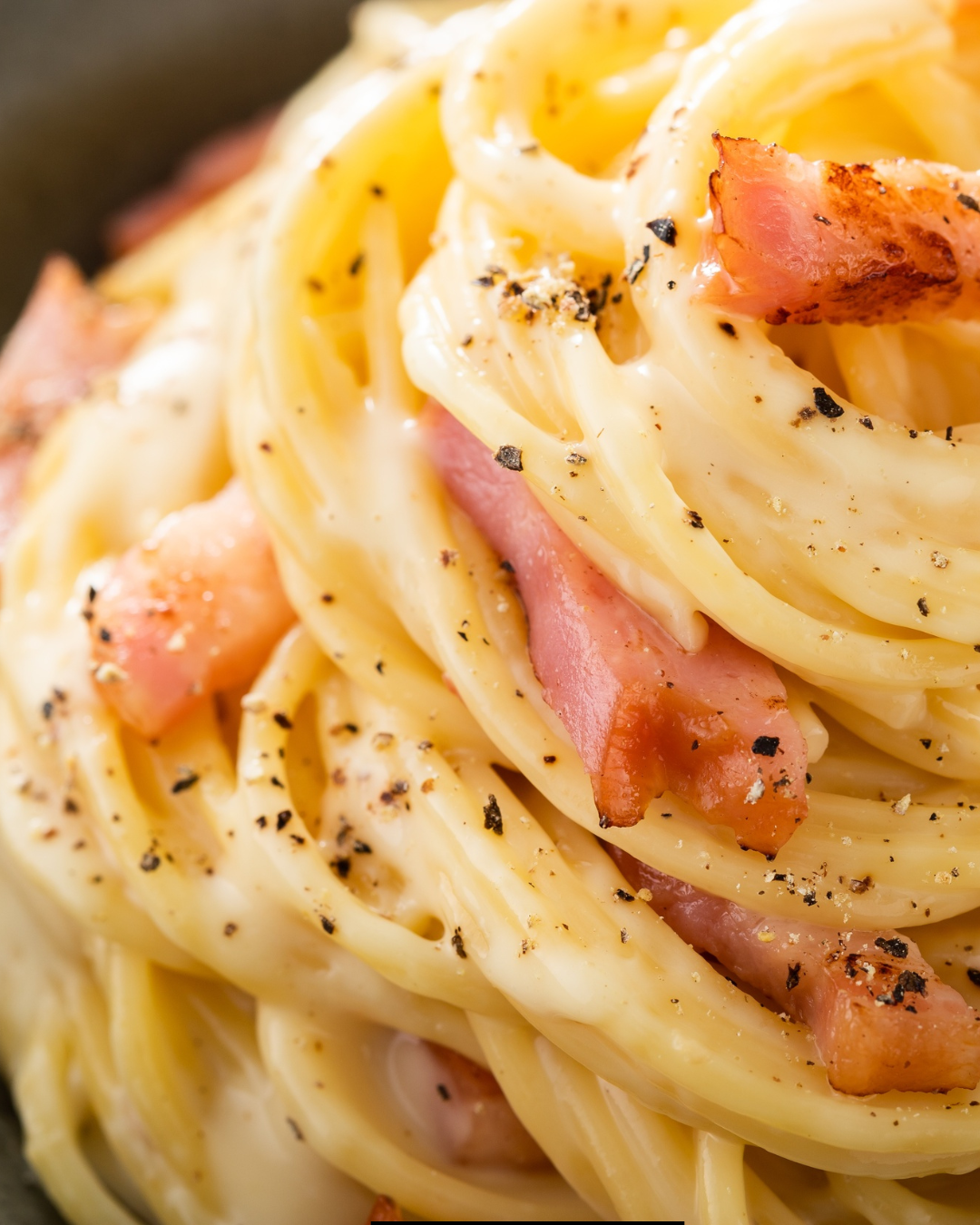
Jamie’s Carbonara recipe is a modern twist on the classic, blending traditional elements with a few unexpected additions that spark endless kitchen debates (yes, I’m looking at you, peas and cream). While purists might raise their eyebrows at some of Jamie’s choices, his version holds its ground, especially for those of us who love recipes that are flexible, delicious, and achievable on a busy weeknight.
Table of Contents
How to make Jamie Oliver’s Carbonara
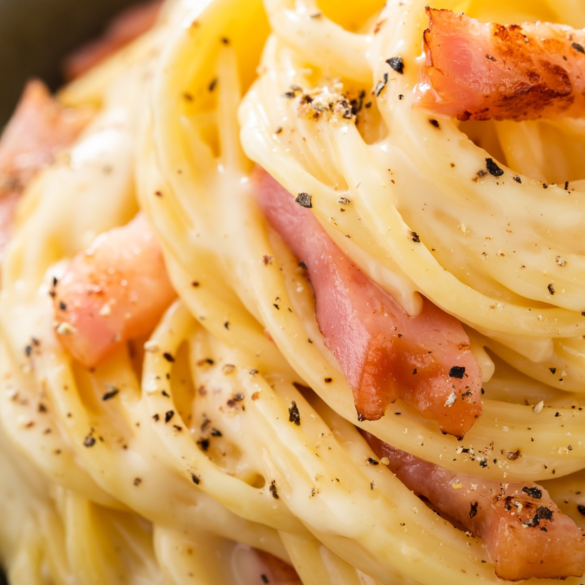
Jamie Oliver’s Carbonara is a creamy Italian-style pasta dish made by tossing hot pasta with eggs, cheese, crispy pancetta or bacon, and black pepper to create a rich sauce without using cream. It is known for its silky texture, smoky flavor, and simple ingredients.
Ingredients
Core Ingredients:
- 400g pasta (spaghetti, fettuccine, or rigatoni work best)
- 150g pancetta (or streaky bacon, finely diced)
- 4 large free-range eggs (or 2 whole eggs + 2 yolks for creaminess)
- 50g Parmesan cheese (or Pecorino Romano, finely grated)
- Sea salt (for boiling water)
- Freshly ground black pepper (to taste)
Optional Additions (Jamie-style):
- 1 clove of garlic, peeled and crushed (optional for flavoring the pancetta)
- Handful of frozen peas (a playful, non-traditional addition)
- 2-3 tablespoons of single cream (optional, for extra creaminess)
- Olive oil (optional, if needed for cooking the pancetta)
Instructions
Step 1: Prepare Ingredients
- Begin by bringing a large pot of salted water to a boil. Add the pasta and cook until al dente, as per the package instructions.
- Meanwhile, dice your pancetta into small cubes. If using Parmesan, finely grate the cheese.
- In a separate bowl, beat the eggs (or egg mixture) and stir in the grated cheese. Season generously with freshly ground black pepper. Set aside.
Step 2: Cook the Pancetta
- Heat a non-stick frying pan over medium heat. Add the diced pancetta and cook until crispy and golden brown. If the pancetta doesn’t release enough fat to coat the pan, add a small drizzle of olive oil.
- Optional: Add the crushed clove of garlic to the pan for extra aroma, but remove it before combining with the pasta to keep the flavor subtle.
Step 3: Toss Pasta and Sauce Together
- Once the pasta is cooked, reserve about 1 cup of starchy pasta cooking water, then drain the rest.
- Transfer the drained pasta directly into the frying pan with the crispy pancetta. Toss everything together to mix.
Step 4: Make the Sauce
- Remove the frying pan from the heat (important to prevent scrambling the eggs). Pour the egg and cheese mixture over the pasta while it’s still hot but off the heat. Stir constantly to create a creamy, emulsified sauce. Add a small splash of the reserved pasta water to adjust the consistency.
- Optional: If using peas, fold them into the dish at this stage. Warm them in the residual heat of the pasta.
- If adding cream, stir in 2-3 tablespoons at this time for an extra smooth consistency.
Step 5: Serve and Enjoy
- Divide the carbonara among serving plates, and finish each plate with an extra sprinkle of grated cheese and a crack of black pepper. Serve immediately while it’s hot and creamy.
Tips for Success
- Don’t Scramble the Eggs: The key to a creamy carbonara is to turn off the heat before adding the egg-and-cheese mixture. Residual heat from the pasta will cook the eggs gently, creating a silky sauce.
- Use Pasta Water Like Gold: The starchy water helps bind the sauce and gives it a glossy, restaurant-quality finish. Add it little by little until you achieve your desired consistency.
- Pancetta Alternatives: If you can’t find pancetta, you can substitute bacon or guanciale. Guanciale is closer to the traditional Italian ingredient, but bacon brings a familiar smokiness that works well.
- Customize to Taste: Jamie Oliver often encourages creativity in the kitchen. While purists may disagree, don’t be afraid to make this recipe your own by adding Jamie’s signature peas or an optional splash of cream.
- Serve Immediately: Carbonara tastes best when eaten right after cooking. It doesn’t hold up as well for leftovers, so aim to enjoy it fresh and hot.
What to serve with
Jamie Oliver’s Carbonara is a rich, creamy dish that stands out as a main course on its own. However, pairing it with the right sides and accompaniments can elevate the experience and balance its creamy, indulgent flavors.
1. Fresh Salads
A light and crisp salad is one of the best ways to complement the richness of Jamie Oliver’s Carbonara. Its refreshing acidity and crunch help cut through the creamy sauce.
Suggestions:
- Simple Garden Salad: Toss together fresh lettuce, cherry tomatoes, cucumbers, and red onions. Dress it with a light vinaigrette made of olive oil, lemon juice, salt, and a bit of Dijon mustard.
- Arugula Salad with Parmesan Shavings: Combine peppery arugula leaves with thinly shaved Parmesan, toasted pine nuts, and a drizzle of balsamic glaze for a tangy and nutty contrast to the Jamie Oliver’s Carbonara.
- Italian Caprese Salad: Slice fresh mozzarella, ripe tomatoes, and basil leaves. Layer them on a plate, sprinkle with salt, and drizzle with olive oil and a touch of balsamic vinegar.
2. Garlic or Herb Bread
Who doesn’t love a side of crusty bread with pasta? Warm garlic bread or herb-infused focaccia can help soak up any extra creamy sauce from the Jamie Oliver’s Carbonara. The crunch of toasted bread adds a nice texture contrast, too.
Suggestions:
- Classic Garlic Bread: Use a baguette or ciabatta, slice it in half, and spread a mixture of butter, minced garlic, parsley, and a pinch of salt. Bake till golden brown.
- Herb Focaccia: Serve slices of airy focaccia lightly drizzled with olive oil and topped with rosemary for an aromatic addition.
- Grissini Breadsticks: Thin, crunchy breadsticks seasoned with herbs and olive oil are an elegant pairing for Carbonara when serving as part of an Italian-themed dinner.
Ingredients Substitutes
Jamie Oliver’s Carbonara recipe is known for being approachable and flexible, making it a great choice for home cooks. However, you might not always have all the traditional ingredients on hand or prefer alternatives due to dietary, cost, or availability factors.
1. Pasta Substitutes
Traditional carbonara recipes usually call for long pasta like spaghetti, but you can swap this for various types of pasta.
Substitutes:
- Fettuccine or Linguine: These long pasta varieties are perfect alternatives to spaghetti and offer a similar texture.
- Rigatoni or Penne: If you prefer short pasta, both are great at holding onto the creamy sauce inside their hollow shape.
- Gluten-Free Pasta: Available at most grocery stores, gluten-free pasta is ideal for those with gluten intolerances. Choose rice-based or chickpea pasta for a close texture match.
- Zoodles (Zucchini Noodles): For a low-carb alternative, spiralized zucchini can replace traditional pasta. While the texture is different, it’s light and pairs well with the creamy sauce.
2. Pancetta Substitutes
Pancetta provides a salty, fatty base for traditional carbonara. If you can’t find pancetta, here are some substitutes:
Substitutes:
- Streaky Bacon: The most accessible alternative, bacon’s smokiness adds depth to the dish. Use unsmoked if you want the flavor closer to pancetta.
- Guanciale: This is an even more authentic substitute for pancetta, as it’s traditionally used in Italian carbonara recipes. Guanciale is cured pork jowl, offering a slightly fattier, more flavorful profile.
- Turkey Bacon: For a lighter or healthier option, turkey bacon has less fat but still provides a mild, salty flavor. Add a small amount of olive oil to mimic the fat of pancetta.
- Vegetarian Bacon or Vegan Bacon Bits: Plant-based alternatives are perfect for vegetarian or vegan variations. Just ensure they are crispy to mimic pancetta’s texture.
- Mushrooms: If you’re avoiding meat, sautéed mushrooms (like shiitake or cremini) can replace pancetta. Their umami flavor provides depth similar to cured meats.
3. Cheese Substitutes
Pecorino Romano or Parmesan cheese is a key ingredient for carbonara’s creamy, salty flavor. If you don’t have either of these cheeses, some options can work just as well.
Substitutes:
- Grana Padano: This Italian cheese is similar to Parmesan but milder and slightly creamier.
- Aged Cheddar: Sharp white cheddar works surprisingly well as a budget-friendly and accessible option for replicating Pecorino or Parmesan’s tangy notes.
- Nutritional Yeast: For a dairy-free or vegan substitute, nutritional yeast provides a cheesy, umami flavor. Use about 2-3 tablespoons per serving.
- Dairy-Free Parmesan: Many specialty stores offer vegan Parmesan alternatives made from nuts or nutritional yeast blends.
- Locally Available Hard Cheeses: Check for hard cheeses that are sold locally, as many of them (e.g., Manchego or Asiago) can work in place of Parmesan.
4. Egg Substitutes
Eggs are essential to achieving the creamy texture of carbonara. If you don’t consume eggs or need an alternative, try these substitutes:
Substitutes:
- Silken Tofu: Blend silken tofu until smooth to create a creamy base. Combine with dairy-free cheese or nutritional yeast for added flavor.
- Cream Sauce: A basic cream sauce made with heavy cream and grated cheese can stand in for the egg mixture. This substitution makes the recipe closer to Jamie Oliver’s version, as he occasionally includes cream in his carbonara.
- Cashew Cream: Blend soaked cashews with water, garlic, and a touch of nutritional yeast to mimic the creaminess of eggs in vegan carbonara recipes.
- Greek Yogurt: For a lighter option with protein, whisk Greek yogurt with grated cheese and a splash of olive oil to achieve a creamy, tangy sauce.
Final Thoughts
Jamie Oliver’s carbonara is a perfect example of his cooking philosophy: simple, flexible, and utterly delicious. While traditional Italian methods inspire it, his adaptations make it accessible for home cooks and perfect for a quick weeknight dinner.
More Jamie Oliver Pasta Recipes:
Ingredients
Core Ingredients:
- 400g pasta (spaghetti, fettuccine)
- 150g pancetta (or streaky bacon, finely diced)
- 4 large free-range eggs
- 50g Parmesan cheese
- Sea salt (for boiling water)
- Freshly ground black pepper (to taste)
Optional Additions (Jamie-style):
- 1 clove of garlic, peeled and crushed
- Handful of frozen peas
- 2-3 tablespoons of single cream
- Olive oil
Instructions
Step 1: Prepare Ingredients
- Begin by bringing a large pot of salted water to a boil. Add the pasta and cook until al dente, as per the package instructions.
- Meanwhile, dice your pancetta into small cubes. If using Parmesan, finely grate the cheese.
- In a separate bowl, beat the eggs (or egg mixture) and stir in the grated cheese. Season generously with freshly ground black pepper. Set aside.
Step 2: Cook the Pancetta
- Heat a non-stick frying pan over medium heat. Add the diced pancetta and cook until crispy and golden brown. If the pancetta doesn't release enough fat to coat the pan, add a small drizzle of olive oil.
- Optional: Add the crushed clove of garlic to the pan for extra aroma, but remove it before combining with the pasta to keep the flavor subtle.
Step 3: Toss Pasta and Sauce Together
- Once the pasta is cooked, reserve about 1 cup of starchy pasta cooking water, then drain the rest.
- Transfer the drained pasta directly into the frying pan with the crispy pancetta. Toss everything together to mix.
Step 4: Make the Sauce
- Remove the frying pan from the heat (important to prevent scrambling the eggs). Pour the egg and cheese mixture over the pasta while it’s still hot but off the heat. Stir constantly to create a creamy, emulsified sauce. Add a small splash of the reserved pasta water to adjust the consistency.
- Optional: If using peas, fold them into the dish at this stage. Warm them in the residual heat of the pasta.
- If adding cream, stir in 2-3 tablespoons at this time for an extra smooth consistency.
Step 5: Serve and Enjoy
- Divide the carbonara among serving plates, and finish each plate with an extra sprinkle of grated cheese and a crack of black pepper. Serve immediately while it’s hot and creamy.