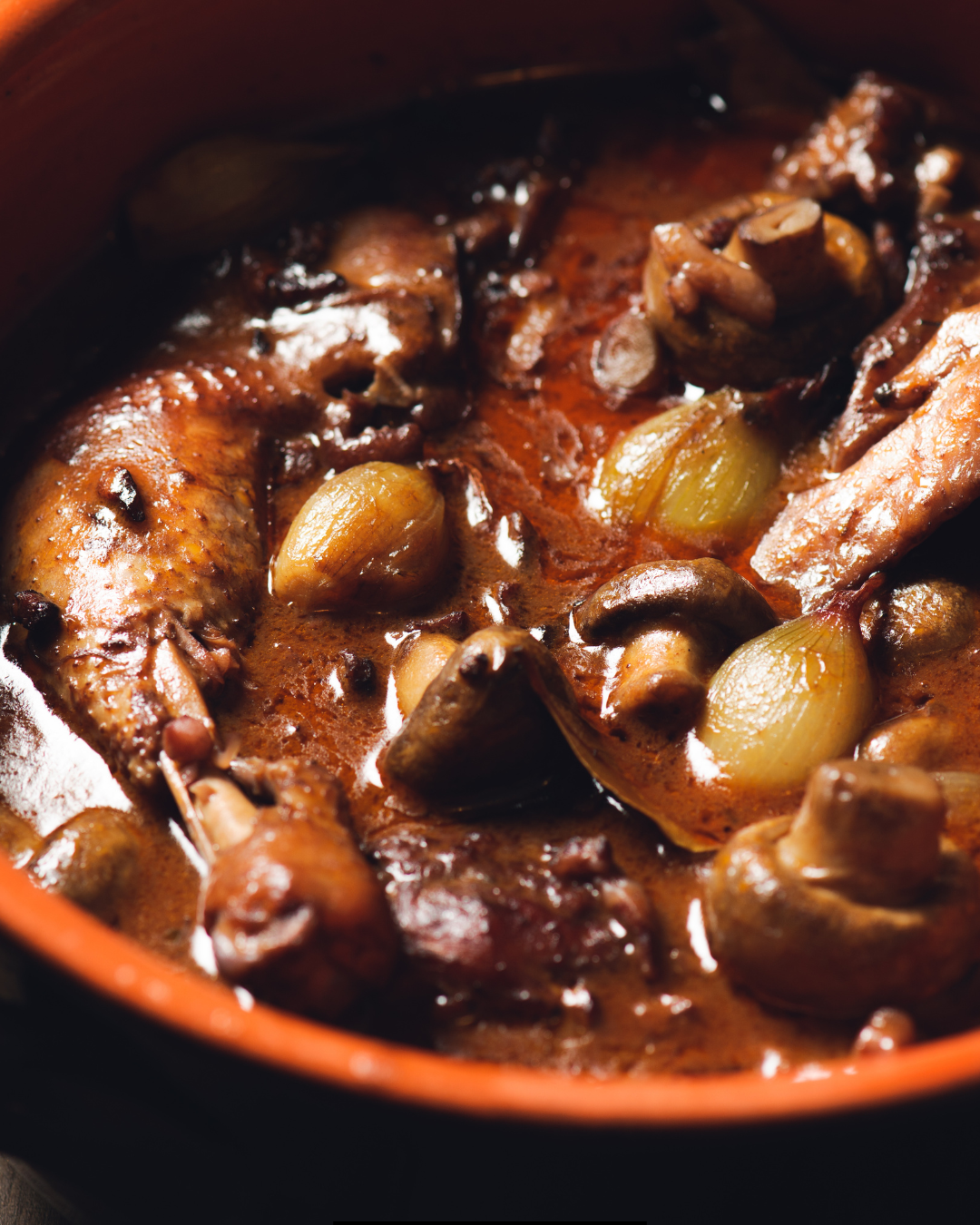
As someone who loves hearty, comforting meals that feel like a warm hug, I couldn’t resist diving into Jamie Oliver’s Coq au Vin recipe. Jamie’s take on Coq au Vin is simple enough for a weeknight dinner yet elegant enough to impress your dinner guests. It’s a dish that transports you straight to the countryside of France, where life slows down and every bite tells a story.
Table of Contents
How to make Jamie Oliver’s Coq au Vin
Jamie Oliver’s Coq au Vin is his take on the classic French stew, where chicken is slow-cooked in red wine with vegetables and herbs until it becomes rich, tender, and deeply flavorful.
Ingredients
- Chicken pieces: 1 whole chicken (about 1.5 kg), jointed into 8 pieces, or use thighs and drumsticks (skin-on and bone-in for flavor).
- Red wine: 750ml (a whole bottle) – ideally something full-bodied, like Burgundy, Merlot, or Côtes du Rhône.
- Bacon or lardons: 150g, chopped.
- Mushrooms: 250g, halved or quartered depending on size.
- Onions: 12 small pearl onions (or shallots, peeled), or 2 medium brown onions, roughly chopped.
- Carrots: 2 medium carrots, cut into chunks.
- Celery: 2 stalks, sliced into chunks.
- Garlic: 4 cloves, finely chopped.
- Chicken stock: About 500ml, to top up if needed.
- Tomato purée/paste: 1 tablespoon, for depth.
- Plain (all-purpose) flour: 2 tablespoons, to thicken.
- Fresh herbs: A few sprigs of thyme, 2 bay leaves, and fresh parsley for garnish.
- Olive oil & butter: For frying.
- Salt & pepper: To season.
Instructions
- For enhanced flavor, marinate the chicken pieces in the red wine with some sprigs of thyme and a bay leaf overnight in the fridge. Drain and pat the chicken dry before cooking, reserving the wine. If short on time, you can skip this step.
- Peel and chop your onions, carrots, celery, and garlic. Halve or quarter your mushrooms. If using pearl onions or shallots, peel them gently and leave them whole.
- Heat a splash of olive oil and a knob of butter in a large heavy-based casserole dish or Dutch oven over medium-high heat. Season the chicken pieces with salt and pepper, then brown them well on all sides. You want a nice golden crust for maximum flavor. Remove the chicken and set it aside on a plate.
- In the same pan, add the bacon and sauté until crispy and golden. Throw in the onions (or shallots), carrots, and celery, and cook for around 5 minutes until softened. Add the garlic and mushrooms and cook for another 2 minutes.
- Sprinkle the flour over the vegetables and stir well, so it coats everything. (This will help thicken the sauce later.) Pour in the red wine, scraping the bottom of the pan to lift any browned bits.
- Return the chicken pieces to the pan, along with any juices they’ve released. Add the chicken stock, tomato purée, and remaining fresh herbs (thyme and bay leaves). The liquid should cover the chicken.
- Bring the mixture to a gentle simmer, cover the pot, and cook on low heat for about 1.5 to 2 hours, stirring occasionally. The chicken should be tender, and the sauce rich and slightly thickened. (If needed, remove the lid for the last 20 minutes to reduce the sauce.)
- Taste the sauce and adjust the seasoning with salt and pepper. Garnish with freshly chopped parsley before serving.
Serving Suggestions
Jamie often emphasizes the importance of serving dishes with sides that can soak up the delicious sauce. Here are a few great options for Coq au Vin:
- Crusty Bread: Perfect for mopping up the rich sauce.
- Mashed Potatoes: A creamy, buttery base to complement the flavors.
- Rice or Pasta: For a simple and filling pairing.
- Steamed Green Beans or Broccoli: To add some light freshness to the meal.
Tips for Perfect Coq au Vin
- A full-bodied, dry red wine works best for Jamie Oliver’s Coq au Vin. Burgundy is the traditional choice, but a Côtes du Rhône, Merlot, or even a Pinot Noir will work beautifully. Avoid sweet or overly fruity wines.
- Long, slow cooking allows the chicken to absorb the wine and aromatics, resulting in tender meat and a deeply flavorful sauce.
- While not essential, marinating the chicken in the wine and herbs beforehand helps intensify the flavors.
- Browning the chicken and bacon properly creates layers of flavor that make the dish stand out.
- If the Jamie Oliver’s Coq au Vin feels too thin at the end, you can mix a teaspoon of flour with cold water and whisk it into the sauce while simmering.
- Jamie Oliver’s Coq au Vin tastes even better the next day, as the flavors deepen overnight. Store leftovers in the fridge for up to 2 days, and reheat gently over low heat.
Ingredients Substitutes
Jamie Oliver’s Coq au Vin is a rich and flavorful French dish that relies on traditional ingredients like red wine, chicken, bacon, and mushrooms. However, there are many reasons you might need to substitute certain ingredients—whether it’s due to dietary preferences, allergies, or simply not having something on hand.
1. Chicken
Traditional Ingredient: Bone-in, skin-on chicken pieces (e.g., thighs, drumsticks, or a whole jointed chicken).
Why Substitute? You might want a different protein or a vegetarian alternative.
Substitutes:
- Boneless Chicken: Use boneless chicken thighs or breasts if you prefer less fuss when eating. Just adjust the cooking time to prevent overcooking, as boneless meat cooks faster.
- Turkey: Turkey thighs or drumsticks are a great alternative for a larger, slightly leaner protein with a similar texture.
- Duck: If you want to elevate the dish, duck legs offer a richer and gamier flavor that pairs beautifully with the wine sauce.
- Tofu (for Vegetarian or Vegan): Use firm or extra-firm tofu, cut into large cubes. Sear the tofu for a crispy exterior before adding it to the sauce.
- Mushrooms (for Vegetarian or Vegan): Use a mix of hearty mushrooms (like portobello, cremini, or shiitake) as the main component of the dish. They’ll absorb the flavors of the wine sauce wonderfully.
2. Red Wine
Traditional Ingredient: Burgundy or a full-bodied dry red wine.
Why Substitute? Some people prefer not to cook with alcohol for personal, religious, or dietary reasons.
Substitutes:
- Non-Alcoholic Red Wine: Provides the same deep, fruity flavors without the alcohol.
- Grape Juice + Vinegar: Use unsweetened red grape juice mixed with a splash of red wine vinegar or apple cider vinegar to replicate the tang and depth of wine. A common ratio is 3 parts grape juice to 1 part vinegar.
- Beef Stock: For a savory and earthy alternative, use a high-quality beef broth with a touch of balsamic vinegar to mimic the acidity of wine.
- Pomegranate Juice: Offers a sweet yet tart flavor that complements the savory components of the dish.
- Tomato Juice: While less traditional, tomato juice with a splash of lemon or vinegar can add a tangy depth.
3. Bacon or Lardons
Traditional Ingredient: Smoky bacon or lardons (small cubes of pork fat).
Why Substitute? You may need a vegetarian alternative, want less fat, or require a pork-free option due to dietary restrictions.
Substitutes:
- Turkey Bacon: A leaner option that still provides a smoky flavor.
- Beef Bacon or Pastrami: A pork-free alternative with a hearty, smoky edge.
- Smoked Sausage (e.g., Chicken or Beef): Slice into small pieces for a similar texture and flavor.
- Smoked Paprika + Olive Oil (Vegetarian): Add a teaspoon of smoked paprika to sautéed vegetables for a smoky flavor without needing bacon.
- Mushrooms (Vegan): Use diced portobello or shiitake mushrooms. When sautéed, they can mimic the texture and umami flavor of bacon.
- Crispy Chickpeas (Vegan): For a crunchy, plant-based protein, roasted chickpeas with smoked paprika can add texture and a hint of smokiness.
4. Mushrooms
Traditional Ingredient: Button mushrooms or cremini mushrooms.
Why Substitute? You may have a mushroom allergy, dislike their texture, or want to add a new twist to the recipe.
Substitutes:
- Eggplant: Diced eggplant offers a soft, tender texture similar to mushrooms and absorbs flavors beautifully.
- Zucchini: Sliced zucchini is a milder vegetable that works well once cooked and slightly softened.
- Bell Peppers: For a sweeter, crunchier substitute, add diced red, yellow, or orange bell peppers.
- Chestnuts: Fresh or canned chestnuts can provide a nutty, earthy flavor and soft texture.
- Cauliflower Florets: While not the same in texture, cauliflower chunks absorb the sauce well and are a suitable option for those avoiding mushrooms.
Final Thoughts
Jamie Oliver’s Coq au Vin is not just a recipe—it’s an experience. The rich, wine-infused sauce, tender chicken, and medley of vegetables come together in a way that feels comforting and luxurious all at once.
More Sauce Recipes:
- Copycat Jamie Oliver’s Get Ahead Gravy Recipe
- Copycat Jamie Oliver’s Spaghetti Bolognese Sauce Recipe
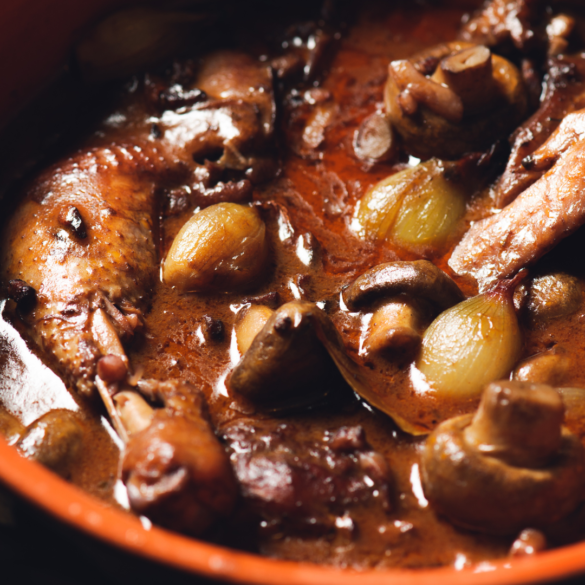
Ingredients
- Chicken pieces: 1 whole chicken
- Red wine: 750ml (a whole bottle)
- Bacon or lardons: 150g, chopped.
- Mushrooms: 250g
- Onions: 12 small pearl onions
- Carrots: 2 medium carrots, cut into chunks.
- Celery: 2 stalks, sliced into chunks.
- Garlic: 4 cloves, finely chopped.
- Chicken stock: About 500ml, to top up if needed.
- Tomato purée/paste: 1 tablespoon, for depth.
- Plain (all-purpose) flour: 2 tablespoons, to thicken.
- Fresh herbs: few sprigs of thyme, 2 bay leaves, and parsley
- Olive oil & butter: For frying.
- Salt & pepper: To season.
Instructions
- For enhanced flavor, marinate the chicken pieces in the red wine with some sprigs of thyme and a bay leaf overnight in the fridge. Drain and pat the chicken dry before cooking, reserving the wine. If short on time, you can skip this step.
- Peel and chop your onions, carrots, celery, and garlic. Halve or quarter your mushrooms. If using pearl onions or shallots, peel them gently and leave them whole.
- Heat a splash of olive oil and a knob of butter in a large heavy-based casserole dish or Dutch oven over medium-high heat. Season the chicken pieces with salt and pepper, then brown them well on all sides. You want a nice golden crust for maximum flavor. Remove the chicken and set it aside on a plate.
- In the same pan, add the bacon and sauté until crispy and golden. Throw in the onions (or shallots), carrots, and celery, and cook for around 5 minutes until softened. Add the garlic and mushrooms and cook for another 2 minutes.
- Sprinkle the flour over the vegetables and stir well, so it coats everything. (This will help thicken the sauce later.) Pour in the red wine, scraping the bottom of the pan to lift any browned bits.
- Return the chicken pieces to the pan, along with any juices they’ve released. Add the chicken stock, tomato purée, and remaining fresh herbs (thyme and bay leaves). The liquid should cover the chicken.
- Bring the mixture to a gentle simmer, cover the pot, and cook on low heat for about 1.5 to 2 hours, stirring occasionally. The chicken should be tender, and the sauce rich and slightly thickened. (If needed, remove the lid for the last 20 minutes to reduce the sauce.)
- Taste the sauce and adjust the seasoning with salt and pepper. Garnish with freshly chopped parsley before serving.